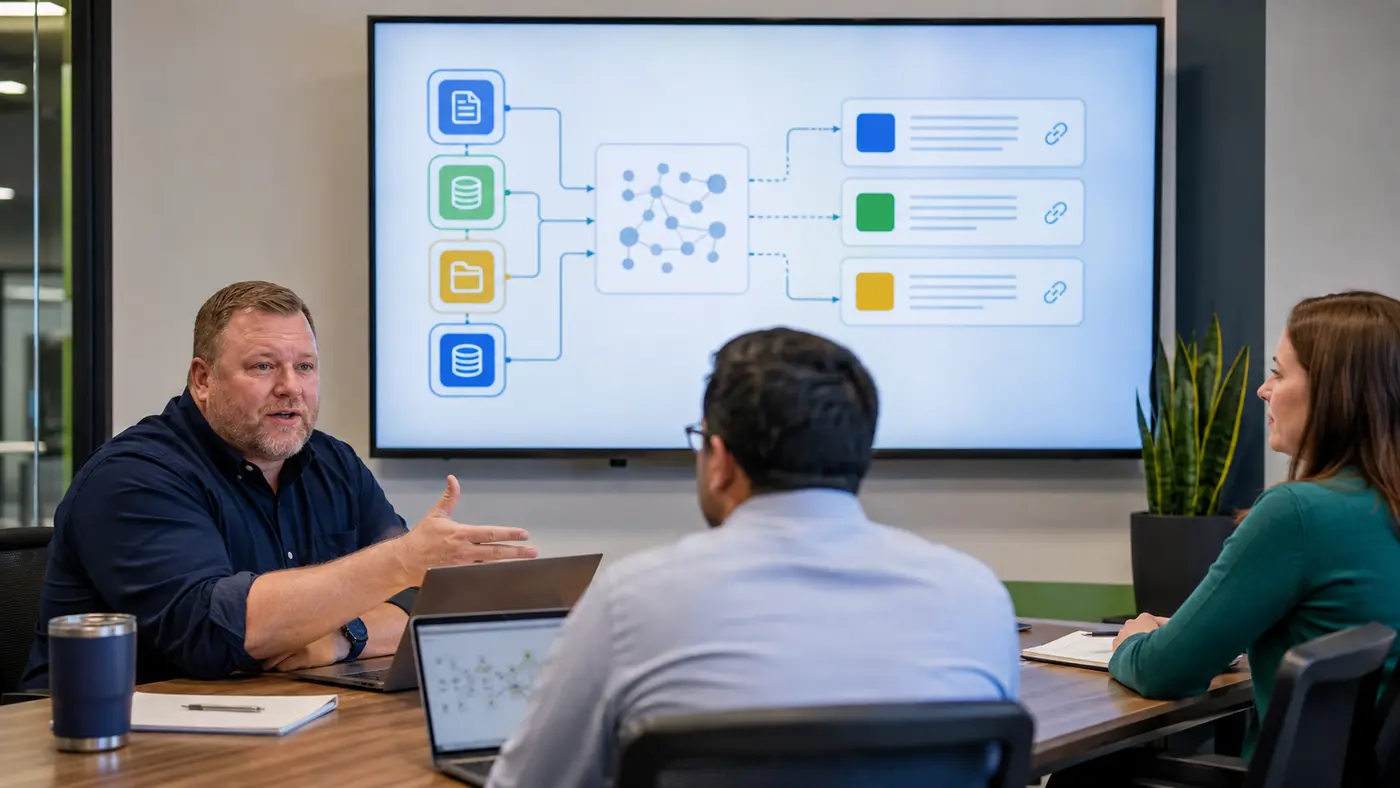
Retrieval-augmented generation combines search and generation. Before answering, relevant content is retrieved from approved sources and supplied as context. This improves currency and verifiability but does not make answers automatically correct.
What the concept actually means
A RAG solution includes ingestion, chunking, metadata, indexing, retrieval, permissions, prompting, answers and citation display. Quality can be lost at every stage.
Why it matters in the enterprise
Enterprise RAG is therefore primarily knowledge engineering and operations: ownership, refresh, deletion, access, measurement and feedback must be designed alongside model and vector search.
A controlled method
The CTPM practice framework for controllable AI applications uses seven stages: understand the task, clarify context and data, apply AI deliberately, review professionally, handle deviations, approve accountably and document transfer. It is a transparent working framework, not a certification.
- Define task and impact
- Clarify data, context and permissions
- Review against domain criteria
- Control deviations, approval and evidence
CTPM practice example
CTPM practice example: Technical operating instructions are segmented by asset, version and validity. Answers may use only active documents and display source, section and version date.
Quality and test criteria
The following criteria make quality observable for this use case:
- Retrieval finds relevant authorised sources.
- Answers remain within retrieved context.
- Citations resolve to exact passages.
- Refresh and deletion are testable.
Risks and common misconceptions
Risks include poor metadata, unsuitable chunking, missing permission filters, embedded prompt injection and precise-looking citations without support.
Example transfer artefact
Transfer artefact: a RAG target design covering sources, metadata, permissions, test questions, quality metrics and operating roles.